Introduction
Cryotherapy is one of the most effective and minimally invasive ways to treat a wide range of common benign skin lesions. At SkinLab Aesthetics and Skin Rejuvenation, we use the CryoPen — a precise, medical-grade cryosurgery device that targets unwanted lesions with controlled, fast-freezing technology.
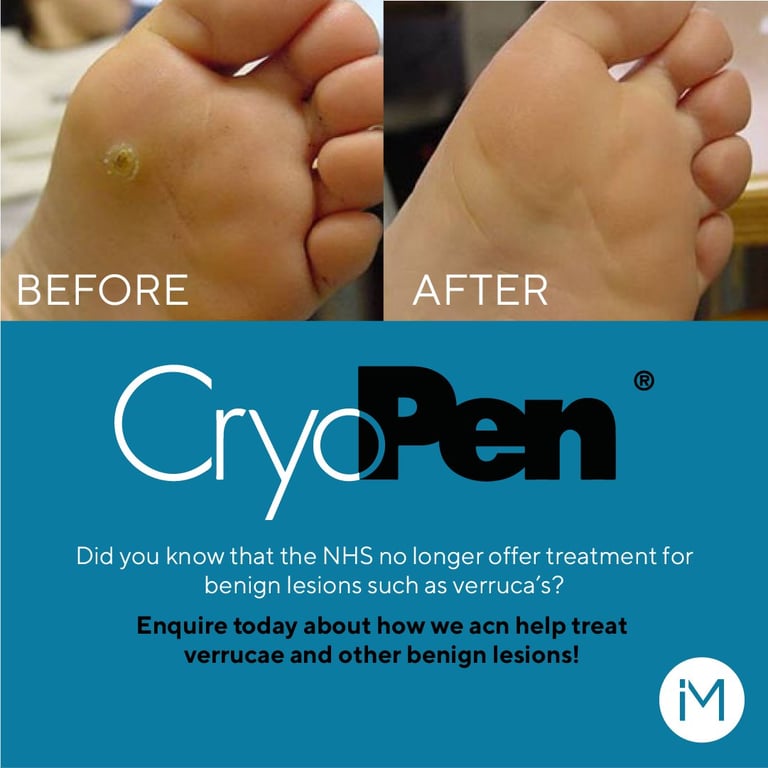
It is a quick, well-tolerated option for many people who want a considered alternative to GP referrals for benign lesions such as verrucas and skin tags. The NHS no longer routinely treats many of these lesions, which is why private cryotherapy has become such a popular option.
What is CryoPen cryotherapy?
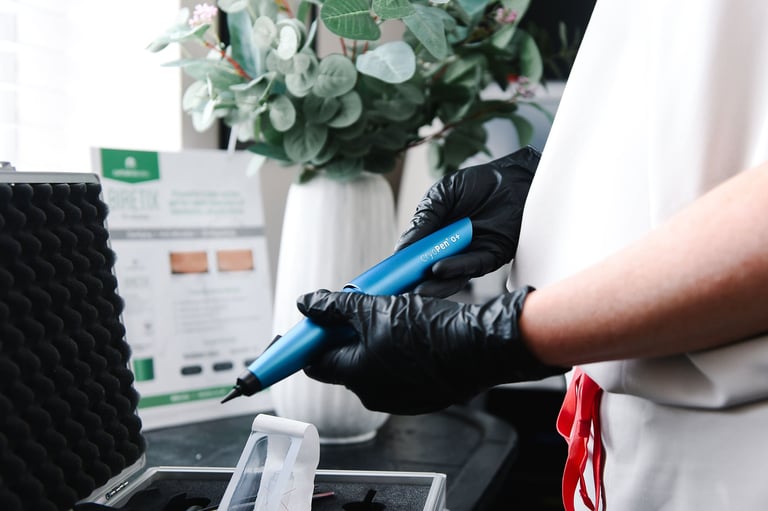
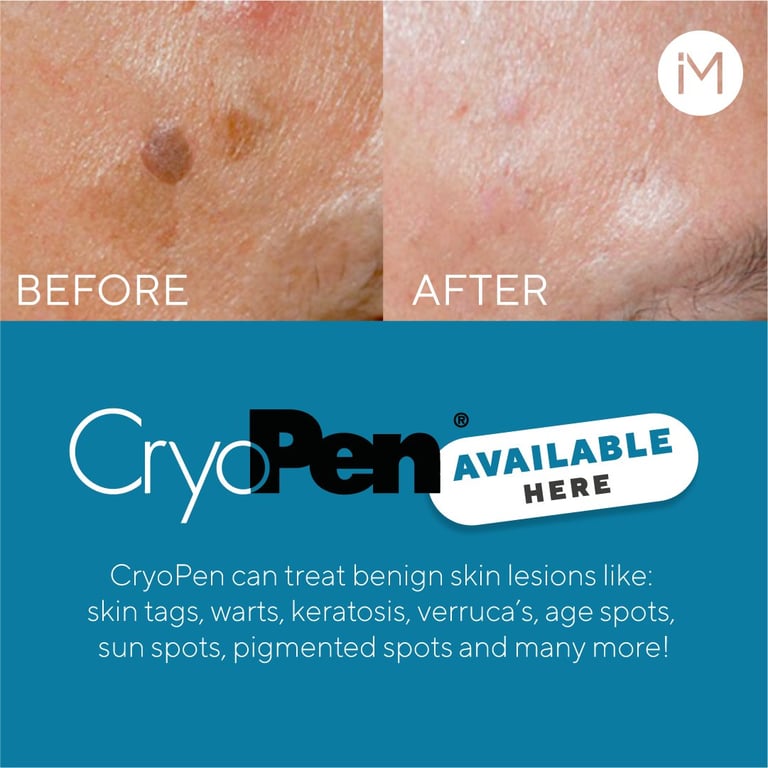
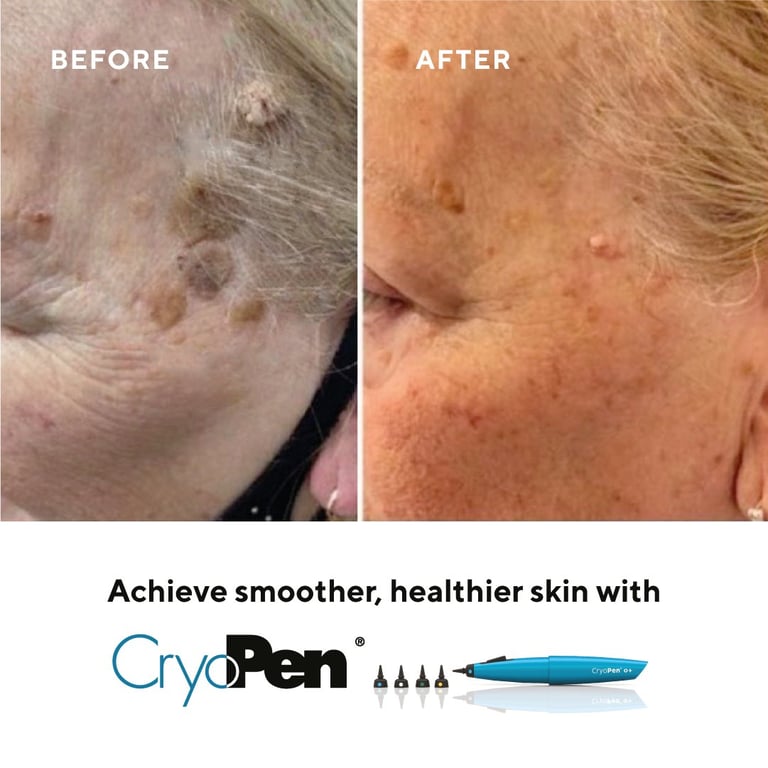
CryoPen is a handheld cryosurgery device that delivers a fine, controlled jet of nitrous oxide directly onto a skin lesion. The extreme cold rapidly freezes the targeted tissue, causing the unwanted cells to crystalise and break down. Over the days and weeks that follow, the treated lesion naturally sheds, leaving healthy skin behind.
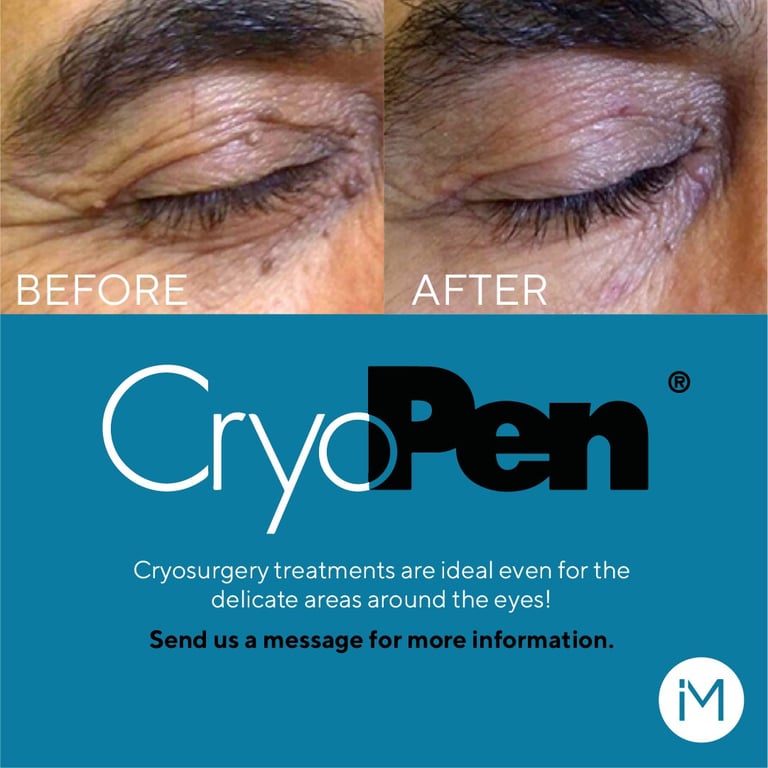
Because the application is so precise, surrounding healthy skin is left largely untouched. This makes CryoPen well suited to treating small lesions on both the face and body, including delicate areas such as around the eyes.
What can CryoPen treat?
CryoPen is designed for benign skin lesions only. Your clinician will always assess the lesion before treatment to make sure cryotherapy is appropriate for you. Common conditions treated include:
- •Skin tags
- •Warts and verrucas
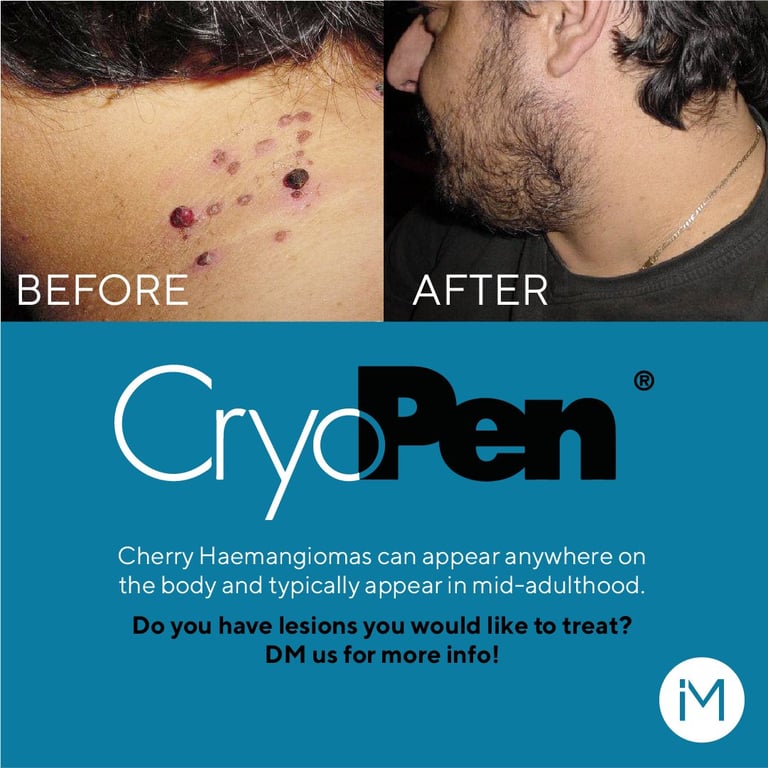
- •Cherry angiomas (also known as cherry haemangiomas or Campbell de Morgan spots)
- •Seborrhoeic keratosis (benign age spots)
- •Solar lentigines (sun spots)
- •Pigmented spots and freckles
- •Age spots
- •Milia (small white bumps)
- •Benign moles (after clinical assessment)
- •Some early skin tags and small benign lesions on the face and body
If a lesion looks atypical or there is any concern, your practitioner will advise on the appropriate next step rather than proceeding with cryotherapy.
What are the benefits?
- •Quick treatment: most sessions take just minutes, depending on the number and size of lesions.
- •No anaesthetic needed: the treatment is well tolerated without numbing injections.
- •Minimal downtime: you can usually return to normal activities straight after your appointment.
- •Precise application: the fine jet of cold targets the lesion while leaving surrounding skin largely unaffected.
- •Suitable for face and body: including delicate areas such as around the eyes, neck and décolleté.
- •Single-session results: many lesions resolve after one treatment, though some may require a follow-up.
- •A private option for benign lesions: useful where the NHS does not routinely offer treatment.
Possible side effects
Cryotherapy is generally well tolerated, but as with any medical-grade treatment there are some possible side effects and aftercare points to be aware of:
- •Mild stinging or discomfort during and immediately after the freeze.
- •Redness and swelling around the treated area, which usually settles within a few days.
- •Blistering: a small blister may form over the treated lesion. This is a normal part of the healing process and should not be popped.
- •Scabbing: a scab typically forms and falls off naturally within 1 to 2 weeks.
- •Temporary pigment changes: the treated area may appear lighter or darker for a period of time, particularly on darker skin tones. This usually resolves over weeks to months.
- •Rarely, scarring: in a small number of cases, a small scar can form.
- •Infection: very rarely, the treated area can become infected. We will advise you on what to look out for.
Aftercare
After CryoPen treatment we recommend keeping the area clean and dry, avoiding picking at any blister or scab, and applying SPF to treated areas that are exposed to the sun. Your practitioner will provide full written aftercare guidance and is on hand to answer any questions during healing.
Who is suitable for CryoPen?
CryoPen is suitable for many people with benign skin lesions they would like treated. There are some situations where it may not be appropriate, including:
- •Suspicious or atypical lesions that require medical assessment rather than cosmetic removal
- •Some skin conditions or very dark skin tones where pigment changes may be more noticeable
- •Pregnancy or breastfeeding (your clinician will advise)
- •Cold-related conditions such as cryoglobulinemia
A full consultation and lesion assessment is always carried out before any cryotherapy treatment to make sure it is the right option for you.
How many sessions are needed?
Many lesions resolve after a single session, but the number of treatments required depends on the type, size and location of the lesion, as well as how your skin responds. Your practitioner will give you an honest idea of what to expect at your consultation.
Considering CryoPen?
CryoPen offers a quick, precise and well-tolerated option for many common benign skin lesions. If you have a skin tag, verruca, cherry angioma, age spot or other benign lesion you would like assessed, book a consultation and your practitioner will advise on the most appropriate approach.
For more information, contact us at hello@skin-lab.uk, arrange an appointment online at www.skin-lab.uk, or call us on 07778 767652.